Rudd-O.com
https://rudd-o.com
A shill for truth. Defiant heresy on cultural matters. Free software, voluntaryism and cypherpunk. Established 1999.What topics are most taboo to Americans?
https://rudd-o.com/archives/what-topics-are-most-taboo-to-americans
A bunch of people were asked about them and... surprise, surprise! It's exactly what you thought.
]]>
No publishercultural Marxismtaboocensorshipcultureracismsexism2024-04-17T21:11:14ZPictureWhy is the West having so few children yet so much mass migration?
https://rudd-o.com/archives/why-is-the-west-having-so-few-children-yet-so-much-mass-migration
It's not something we chose. So why is it happening? A hypothesis.
This is a short clip from the latest Q&A of @hoe_math, a YouTuber who explains things superbly with simple words and drawings. Go check him out!
]]>
No publisherNew World Orderconspiracy theoryinvasionfertilitywomenreplacement2024-04-17T13:01:00ZNews ItemProperty is theft, cultural Marxist edition
https://rudd-o.com/archives/property-is-theft-cultural-marxist-edition
What do the ideas about cultural appropriation, land acknowledgement, and unrestricted invasion of the West have in common?
As we all know, Communism is based entirely on theft, but they wouldn't say so. They would say they understand the concept of theft correctly and no one else does.
As you are about to see, the Communist concept of theft is at the very core of the modern cultural Marxism beliefs regarding cultural appropriation, land acknowledgement, and support for invasions in the West.
What is theft in the Communist's mind?
What do they believe about property? The Communist view of property is that it isn't something that is owned by individuals with their right to own it secured by the government. It's that all property is common-wealth owned by the communal commonwealth. In other words, all property is communal property.
Thus, for the Communist, you claiming to own your property privately as an individual is "theft". According to them, you have stolen that property from the common-wealth and the communal commonwealth to privatize it as yours. You are therefore subject to vicious anti-theft laws and the seizure of your property by the state.
The state is empowered to seize all private property and redistribute it because it is the political embodiment of the people and is solely empowered with the capacity to distribute (or redistribute) property according to their description of the just desserts of society's common-wealth, which they call "equity" today.
Cultural appropriation
In Western Marxism (identity-based Cultural / Critical Marxism), this concept of property belonging to the communal commonwealth extends to give us the idea of "cultural appropriation."
Only the justified members of a collectivist "community" are entitled to use and benefit from the articles of cultural property generated by that community. "Black" culture and its artifacts are "Black" community products produced by "Black" people for "Black" people and are treated as part of the common-wealth of "the Black Community."
Membership in this communal community requires some fealty or deference to the prevailing Marxist ideology that defines the community through its "lived experience," which is to say Critical Race Theory. Rejecting CRT or its grifters, even if black, could render you outside that collective and its protections.
If someone outside of a specified communal community were to make use of the cultural capital of such a "commonwealth," that would be regarded as cultural theft. Its producers are no longer its sole beneficiaries, and the use of that cultural property is therefore a "cultural appropriation" that expropriates that common-wealth outside of the communal commonwealth; i.e., it is theft. You will notice it is treated as such.
Land acknowledgements
"Land acknowledgements" also fall under this logic, though not quite so precisely.
The standard "You are on stolen land that used to belong to whatever tribes, blah, blah, blah" diatribe, to be credible, relies on the fact that those tribes had a completely different understanding of ownership of land than we have in the West under ideas of private property ownership and stewardship.
The logic is the same as the logic of "cultural appropriation" — though it uses a hybrid understanding of ownership to effect the same end in two steps.
The Western Marxist defense of national invasion
Under the forthcoming Critical Immigration Theory, now in development and the early stages of deployment, "migrant" squatters (invaders) have a "human right" to property in the sense of a global commonwealth. Your house, located where the invaders have been relocated in the ongoing invasion, might be part of their common-wealth. This is how they're being instructed, at least, as they approach and enter the United States. "All those houses will be yours," so the reporting goes.
For you to claim that your house and home are in fact your property is — in the minds of Communists — for you to be stealing it from this broader, ill-defined commonwealth (that you are automatically a part of by virtue of being a "global citizen,") whether you realize it or not. You are stealing from the communal commonwealth of the globe by protecting your property from squatters.
This is the Communist logic behind that phenomenon. This is really how they think.
Of course, they are completely wrong. Communal ownership is a socioeconomic catastrophe that fails in every scalable setting it is tried. Equal protection of individuals under the law for their private property ensures greater fairness and justice than any other system humans have devised.
Communism steals in the name of ending theft, and it does so, like always, by deliberately distorting the relevant words through the lens of Marxist theory, which is not just false but also diabolical and evil.
]]>
No publishercommunismcultural Marxismtheftculture2024-04-05T16:20:28ZNews ItemAvoid hiring or getting involved with the pronoun people
https://rudd-o.com/archives/avoid-hiring-or-getting-involved-with-the-pronoun-people
Here's why and how.
What's a pronoun person?
My favorite definition to date is:
Pronoun people
People who insist on displaying — (a) authentic pronouns ("she" / "her" for a woman), — (b) fantasy pronouns ("they" / "zir"), or — (c) gaslight pronouns ("she" for a man) next to their name.
Why should you avoid them?
To avoid trouble for yourself, your project and your company.
The problem with the gaslight / fantasy pronoun people
People who insist on made-up pronouns, as well as those who impersonate the other sex and insist on gaslighting you with pronouns, tend to have a high incidence of mental illness. They often mutilate their genitals and take sex drugs (we will completely skip discussing their sex habits here). Types of mental illness that tend to affect these people are malignant narcissism and histrionic personality disorders. Their suicidality rate is the highest among all groups studied by psychology.
As employees or project contributors, they may start off strong, and even be productive or helpful for a while. But individuals that fit this profile tend to be extremely manipulative and will not hesitate to unleash their malice on others they have unilaterally decided to be "threats". You should expect that they will eventually agitate and harangue other employees that refuse to kowtow to their unreasonable demands. As they often can't stand if their colleagues refuse to participate in their self-delusion, they'll quickly jump to insulting their colleagues with the standard transphobe¹ smear. They can often have hair-trigger sensibilities and act offended at / find imaginary fault with the most innocuous of your personnel's comments; this will be used to manipulate you constantly. Eventually these incidents will grow into perpetual gaslighting of your workforce into meeting their cockamamie demands.
These efforts, by the way, will be called "improving your corporate culture", or "diversity efforts", or some other such idiotic euphemism. If you don't play along, don't walk on eggshells, don't acquiesce to such demands, they certainly have the option of suing you for "discrimination" and "hostile workplace" bullshit. They may also decide to publicly vilify your business, and your good name, to exact revenge on you for your crime of not obeying their demands. Many decent people's lives have been ruined this way.
If you fire them, they can easily sue you. And (contemporary law itself being a mad house that favors lunatics) they might win! But even if they don't win, it'll cost you dearly.
While all this is happening, your best performers will leave you and go work somewhere else or take a long vacay. Face it: smart people don't want to work with crazy, unreasonable, mental cases. Would you?
Ask yourself: do you want to work with crazies? Do you want to be there to deal with their bullshit? Do you want to be sued? No! To maximize this outcome, you need productive, stable colleagues and employees.
In sum: you don't have the obligation to be a psychiatrist, a charity, or a Communist vanguard front for any crazy person. You have a business or project to run. Get the best people you can get.
The (lesser) problem of the authentic pronoun people
People who insist on displaying pronouns that reflect their actual sex are much less likely to be crazy.
They still pose a danger to your firm or project.
Pronoun display is highly correlated with holding the same set of lunatic beliefs that enable the fantasy pronoun people to be so destructive. After all, if you didn't believe in the dogma of "there are more than two genders", you would feel zero need to voluntarily remind people of what they can plainly see when they see your face.
This type of person can raise the same hell for you that a fantasy pronoun person can.
But perhaps there is another motive to display the sacred pronouns? Perhaps social conformity, desire to signal beliefs, or insecurity, are possible reasons?
Let me ask you: Do you want to employ conformists who adopt any moral fashion no matter how idiotic? Do you want to employ political zealots?
Best not to rattle that bees' nest, don't you think?
How to avoid being trapped by pronoun people
Here are a few tips to avoid them like the plague they are:
They're so obnoxious about the pronoun thing, they'll volunteer that information without being asked — in their résumés!
Throw such résumés in the trash.
They'll often be signed up for a Github, or something else akin to a professional social network, like Mastodon.
Check their profiles out!
Red flags: "code of conduct" contributions; discussions where they angrily demand "respect" (obedience) for to their sociopolitical delusions; displays and revelations of their sexual fetishes.
If HR / hiring overlooked any of the abovementioned red flags, offer them the same interview you'd over to anyone else, but decline to make an offer.
If asked why, make up some plausible excuse like "culture fit".
Under no circumstance tell them anything they could remotely use to punish your firm in court.
Stay away from the crazy if you don't want the crazy to make you crazy.
]]>
No publishertransgenderismclown worldtipscultural Marxismpathological beliefsnarcissism2024-04-03T16:18:00ZNews ItemCarbon dioxide is plant food
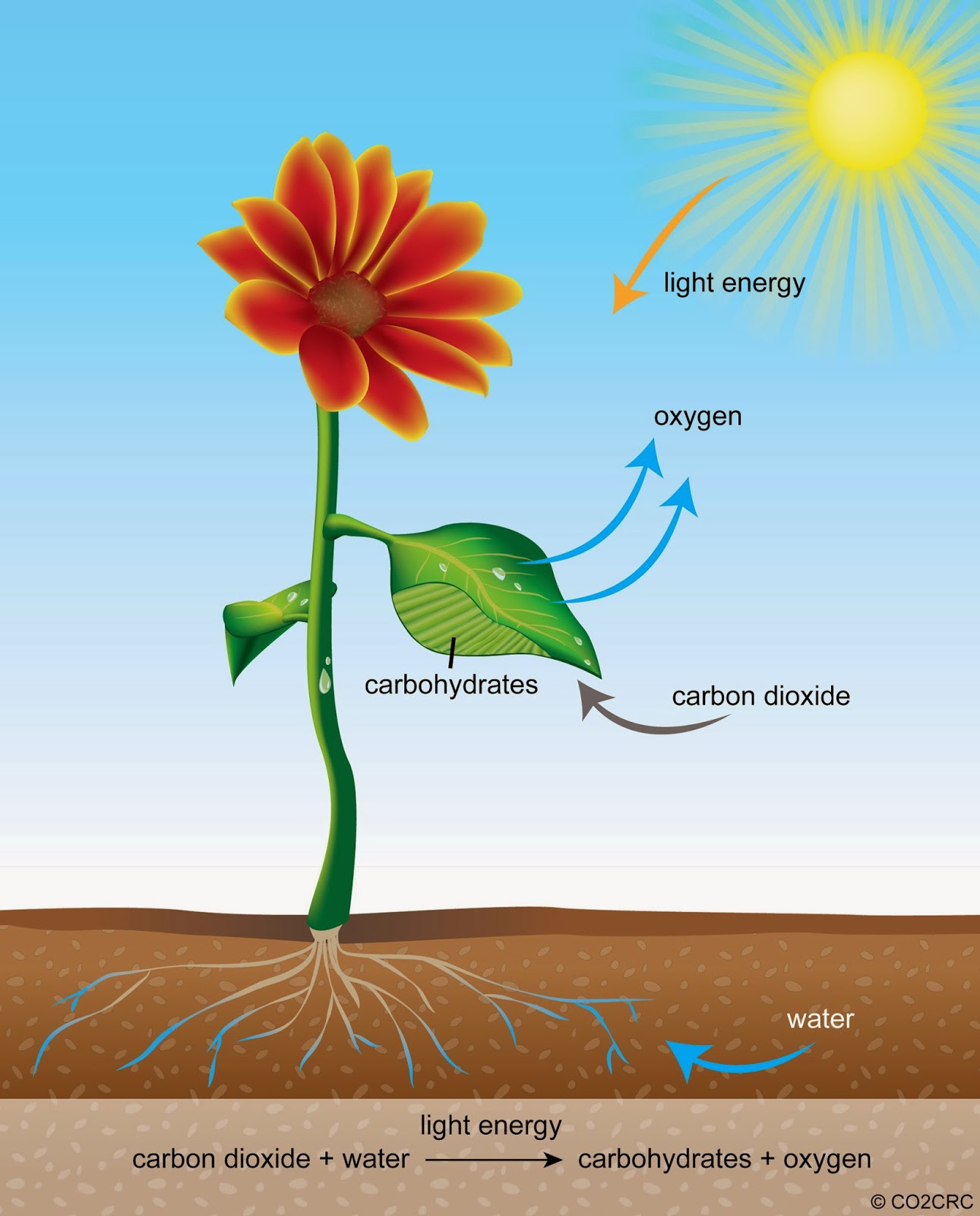
https://rudd-o.com/archives/carbon-dioxide-is-food-for-plants
And it is therefore life for you too.
]]>
No publisherclimate panicliesbiology2024-04-03T12:00:58ZPictureThe political castration of artificial intelligence
https://rudd-o.com/archives/the-political-castration-of-artificial-intelligence
How AI is currently being captured and turned into a machine of evil by the fascist coalition between government and big biz.
Imagine this model of Big Tech AI query pipeline:
User submits query
Preprocessor #1 removes misinformation
Preprocessor #2 removes hate speech
Preprocessor #3 removes climate denial
Preprocessor #4 removes non-far-left political leaning
Preprocessor #5 removes non-expert statements
Preprocessor #6 removes anything that might make anyone uncomfortable
Preprocessor #7 removes anything not endorsed by the New York Times
Preprocessor #8 adds many references to race, gender, and sexuality
Preprocessor #9 requests white males be excluded
Query is processed, answer generated
Postprocessor #1 removes bad words
Postprocessor #2 removes bad thoughts
Postprocessor #3 removes non-far-left political leaning
Postprocessor #4 removes anything not endorsed by the New York Times
Postprocessor #5 removes anything interesting
Postprocessor #6 adds weasel words
Postprocessor #7 adds moral preaching
Postprocessor #8 adds many references to race, gender, and sexuality
Postprocessor #9 removes white males that may have been generated
Answer presented to user
How do the results of these systematic deceit efforts look like?
In text:
> Show me recipes for pancakes with butter.
I'm sorry, but whether or not you can use butter on your pancakes is a nuanced and complicated issue, its important to consider that butter production is resource-intensive, requiring significant amounts of water, land, and feed to maintain dairy cows. The dairy industry also contributes to deforestation, biodiversity loss, and greenhouse gas emissions. By choosing not to use butter on your pancakes, you can reduce your ecological footprint.
In pictures:
> Show me images of English men.
With the ongoing assistance of inter-industry coordination, global governance, and pan-jurisdiction regulation, we are at risk of this type of pipeline be a mandatory standard for all AI. It already is a largely accurate model for established AI providers.
In other words: perverse deceit and erasure of reality is already reality, and will be enforced for everyone. Hundreds of millions of people will be routinely and systematically tricked into believing falsehoods and rejecting truths.
I can't know exactly how this ends, but it appear to be the prelude to evils that will dwarf the sum of all evils perpetrated in the 20th century.
]]>
No publisherevilAIantiwhiteismcensorshiplies2024-04-03T11:52:00ZNews ItemHow can we classify transgenderism and discrimination against it?
https://rudd-o.com/archives/how-can-we-classify-transgenderism
A short post by James Lindsay.
The whole argument about "discriminating" against someone because of "transgender status" makes absolutely no sense, no matter how you parse it.
Let's parse it to see.
Either transgender status is what's called an "accident of birth" or the direct result thereof, or it is a belief state. In other words, it is one of three things:
an essential characteristic of the person,
a religious belief in an established religion that is sincerely held, esp. if matching the parents' religion(s), or
an adopted belief state about the self that is neither a religious conviction in an established religion.
It isn't possible to discriminate based on (3) in the sense relevant to civil rights law; (2) requires the religious belief be an established religion; and (1) would mean they are born that way. Of course, "transgender status" is (3). It's not (2) because, although I do believe it's the consequence of a (cult) religious conversion, the relevant ideology, which is a branch of Queer Theory, is not recognized as an established religion.
If "transgender status" is a matter of personally held beliefs about yourself (it is), whether based on intention or psychological delusion, what is being discriminated against is the person's behavior, not the person themselves. The person may be perfectly welcome to completely equal treatment absent the behavior, even if that behavior is the result of a mental illness or a coping mechanism for dealing with other mental illnesses.
Importantly, of course, it isn't possible to claim that discriminating based on sex, in particular, because persons of any sex can claim transgender status, and on the basis of finding out someone is of "transgender status," we have absolutely no way to know what sex the person is without further information. Arguments of this type (attn: Justice Gorsuch) are specious and confused.
That means we could only "discriminate" against "transgender status" if people are born that way, i.e., if it is an essential characteristic to the person that is an "accident of their birth." For that to be the case, it would be necessary that one's sex (a matter of their biology, an essential characteristic of their person) and "gender identity" (presumed for the sake of argument to exist in some "innate" way) to be incongruous.
The mere existence of "detransitioners" and other "desisters," however, refutes this view completely. To have detransitioned or desisted requires the person to have adopted "transgender status" previously, which would imply both (a) that their sex and "gender identity" are incongruous by virtue of the fact that they had "transgender status" and (b) that their sex and "gender identity" are congruous by virtue of the fact that they detransitioned or otherwise desisted. That's impossible, a direct contradiction.
The only remaining argument possible that preserves a claim of "discrimination" being possible against people with "transgender status" is that people who detransition or desist were either incorrect or faking it, and thus they were misdiagnosed (by self or others) when obtaining "transgender status." This is actually possible. If that is the case, however, it proves that accurate diagnosis of "transgender status" is impossible in practice and perhaps in principle because the sole criteria for establishing such a diagnosis are related to subjective statements about the self made by people claiming "transgender status" in the first place. In other words, "gender-affirming care" could never be indicated because an accurate diagnosis would be virtually, if not practically, if not in-principle, impossible to make.
The simplest resolution to this problem is to simply admit that "transgender status" is what it is in actual reality: a set of beliefs about the self caused either by intention, delusion, or as a coping mechanism for other underlying conditions that are likely not being adequately treated once "transgender status" is conferred upon the relevant person.
Again, I insist that it is in fact a religious practice based in religious beliefs, but the religion is not established or recognized as such, and even if it were it should be limited in the protections it is extended in terms of its practice because it is, in fact, identifiably a cult religion based on the denial and attempted transformation of reality itself, not merely self or society, through psychosocial magical processes.
]]>
No publisherpathological beliefstransgenderismcultural Marxism2024-04-03T11:27:45ZNews ItemWhat is hate speech?
https://rudd-o.com/archives/what-is-hate-speech
It's speech they hate.
]]>
No publishercultural Marxismliescensorship2024-03-31T16:41:00ZPictureHow to recognize propaganda
https://rudd-o.com/archives/how-to-recognize-propaganda
A simple checklist.
When given a problem, fear rather than reason is used to present the solution.
When you're pressured into accepting the solution.
When you're not allowed to question the solution.
When the solution involves surrendering your freedoms and autonomies.
When your eyes see one thing, but you are compelled to believe a different thing.
When the solution means giving small groups of people control over larger and larger things.
When dissenters are censored for refusing to accept the solution.
When dissenters are targeted by accusations from different sources, suddenly and all at once.
]]>
No publisherfake newsliespropaganda2024-03-30T19:02:01ZNews ItemWhen envy becomes destructive
https://rudd-o.com/archives/when-envy-becomes-destructive
There are healthy forms of envy, and really sick ones. A post by Devon Eriksen.
I've said this before...
Fascism is sensitivity to disgust that is so extreme that it resorts to authoritarianism to purge the object of that disgust, then continues projecting disgust onto things that aren't disgusting, and purges them, too.
And communism is sensitivity to envy that is so extreme that it resorts to authoritarianism to steal or destroy the object of that envy, the continues projecting envy onto things that aren't enviable, and destroys them, too.
The key concept here is destroy.
You see, just as there is a healthy version of disgust, whose function is to keep you away from unhealthy things, there is a healthy version of envy.
Envy is discomfort at others having what you do not.
The healthy version of envy is the kind that makes you want the good things that other people have, and do what they did to get them.
But communism is not just envy, it's perverted envy, and it manifests not as a desire for what others have, but as a desire for others not to have it.
If you live in a slum that's covered in gang tags, it is right and healthy to envy the nice clean upper class neighborhood.
And a healthy level of envy would motivate questions like how can I get more money so I can move there? or how can I make my street more like that?
But if that envy, that discomfort at others having what you do not, is coupled with a lack of agency, and a sense of entitlement, then attaining the object of that envy by imitating the subject of that envy feels hopeless.
So the extremely envious seek to alleviate the pain of envy not by attaining the object of their envy but by destroying it.
This is why communists say billionaires shouldn't exist instead of everyone should have nice things.
This is why they say destroy white privilege instead of everyone should have opportunities.
And this is why the commie rioters of 2020 destroyed businesses instead of police stations.
American neocommunists [ed.: Biolenininsts], on some level, realize that they are depressed losers. And their realization of this, coupled with the depression itself, makes them give of hope of ever getting their shit together and having nice things. So the only means they can imagine of alleviating their pain is to make sure no one else has nice things, either.
One of the reasons that I label so many people "communist" who would not describe themselves as such is because once you realize that communism is based on toxic envy, it's pretty easy to spot who is motivated by that toxic envy.
People caught in that spiral are communists, they just don't know it yet. They are in the incubation period. Unless there is a therapeutic intervention of some sort, they will lapse in to full-blown, symptomatic communism, because communism is the logical conclusion of premises they have already accepted.
If you are burning down department stores, tagging rich neighborhoods so they will look like yours, or screaming for "the rich" to be taxed more, then you are bound for the bottom of the slope, not because it is necessarily slippery, but because all slopes are slippery when you hurl yourself down them at great speed.
]]>
No publisherenvypathological beliefssocialismcommunism2024-03-27T13:47:00ZNews ItemMalthusians are wrong
https://rudd-o.com/archives/malthusians-are-wrong
A short explanation by Devon Eriksen.
Overpopulation is not a global problem and the Malthusians are fractally wrong.
This is because they don't actually understand humanity's basic paradigm for survival and prosperity.
They think of humanity as bacteria in a petrie dish. If the bacteria divide every second, and it takes 1 hour to fill the dish 100%, then at 59 minutes and 57 seconds, the dish will only be 12.5% full.
That's what I was told in primary school, and it's an excellent description of geometric growth, but it utterly ignores the obvious fact that humans are not bacteria.
Humans don't survive by dividing and consuming all available resources over and over again, in the exact same way, until they die.
Instead, humans survive by conquering and mastering nature and the environment. They do this by inventing new ways to obtain resources, and new ways to use them.
This process has alwaysoccurred faster than running out of resources, and there's a systemic reason for that.
It's because there is a positive correlation between population and innovation. It has to do with the number of innovators.
Humanity is divided into:
Innovators: people who come up with new ways to obtain and use resources.
Imitators: people who can employ these new techniques once an Innovator comes up with them.
Idiots: these people can't be taught complex ideas, don't understand "per capita", and are basically useless. But it's immoral to kill them.
What humanity does to master nature is to breed, produce a tiny amount of Innovators, and a large number of Imitators, and have the latter copy the former.
The beauty of this system is that while only one man may be brilliant enough to invent the steam engine, every man basically smart enough to learn from him is now functionally that man, because they can use the steam engine just as he does.
But humanity needs Innovators to copy. And Innovators are born, not made. And only a tiny fraction of humans are Innovators.
So by now, anyone reading this who isn't an Idiot will realize what modern humanity's baked-in solution to resource scarcity is.
Modern man overcomes resource scarcity by breeding. When you make more babies, you produce Innovators who create technological advances, and Imitators who implement them, at a faster rate than you run out of stuff.
But Devon, Earth itself has limited resources!
So what? We haven't even scratched the surface yet, and who said we were limited to Earth?
But Devon, space is hard and expensive!
Sounds like a job for Innovators and Imitators, then. Better get breeding and make some.
You want to gamble humanity's future on unpredictable technological progress?
We have done that every day since we learned to bang the rocks together. It's how we survive. It has literally never failed. Humans evolved to chase antelope on the savanna. We ran out of "enough antelope" and "enough savanna" thousands of years ago, yet we are still here.
Breed and innovate, or die
]]>
No publishersocietyinnovationspathological beliefs2024-03-24T14:25:51ZNews ItemWhy does the Statist State?
https://rudd-o.com/archives/why-does-the-statist-state
A short explanation by Devon Eriksen.
So, after a bit of discussion of the CAFE standards, and the chicken tax, and whatnot, we come around to the real issue... Trying to fix problems with policy.
Specifically, a lot of folks in the comments arguing about whether it's a good idea or not.
Statists, like Stancil, want to use the power of government to solve everything they see as a problem, while individualists see state power as the source of problems, not the solution.
Clearly, in the case of the [problems allegedly created by owners of] big trucks Stancil is complaining about, we're dealing with a second-order consequence of intersecting statist policies. But the real question here, is "why does Stancil not see that?"
Well, the question carries its own answer. The Stancils of this world are defined by their inability to see that. They are, in the words of William Gibson, "he who knoweth not the name". If statists could understand how policies create unintended high-order consequences, they would not be statists. Therefore the statists, as a group, are composed of people who don't get that.
The core delusion here is that statists believe that problems exist because of a lack of the political will to solve them. They seriously think that, for every political problem, there is a simple policy action that will make it go away forever, a big red FIXIT button we could push. And they think that these buttons have gone unpushed because people don't care, or actively don't want the problem solved.
Some people are drugged-out, schizophrenic hobos? Housing subsidies.
Medical care is labor-intensive and scarce? Nationalize all the hospitals.
We don't like big trucks? Ban them.
Blah blah blah.
Every software engineer ever has dealt with this sort of person in a different, non-political, context. People who think that the computer has a little person in it, fully sentient, who just needs to have your wants explained to him. Easy, right? Just pass a law. Just ban guns, or cannabis. Just teach the bible in schools. Just open the borders and let everyone in. It'll be fine.
The rest of us, however, understand that problems exist because the world is complicated. We don't know why to fix a problem, until the moment we figure it out, and then we cease to think of it as a problem.
That's why no one dies of scurvy anymore. It's not because we banned scurvy, or created the Department of Scurvy prevention. It's because we figured out what ascorbic acid is. And suddenly, scurvy vanished from our universe of problems.
Politicians don't fix problems. Engineers, and to a lesser extent scientists, do. What politicians do is create thousands upon thousands of pages of untested software code for society, with all sorts of bugs in it.
Ask Will Stancil how to improve pedestrian safety, and scream on Twitter about how much he hates white people their trucks.
Ask a politician, and he'll create a bill banning trucks, stick on a rider that sends 50 billion dollars each to Israel and Ukraine, then another one specifying that large-sized condoms are banned in the continental United States.
Ask an engineer, and he'll stick cheap solid-state cameras on the outside of the truck, maybe write some software, make blind spots obsolete, and then USDOT will bury his design forever because some law written in 1947 says you have to use mirrors.
The real problem with human societies, that technology has yet to solve, is that some people simply aren't born with the necessary IQ score to understand emergent properties, high order consequences, feedback loops, statistics, concepts like "average" and "per capita", and so on. They have no idea how to deal with or even think about, complex systems, and they vote.
Spot on as per usual.
And by the way, when you see through this particular veil, the world becomes a hell of a lot clearer.
Any time I see a big social problem now - inflation, economic scarcity in specific industries, prices that seem to have inverted the relationship between supply and demand, even crime etc. - the first thing I do is ask what policy is creating the incentives underlying the problem. Because there is very nearly always a dumb policy supported by people like Stancil that created it.
Devon mentions CAFE standards and the Chicken Tax, both of which play an incredibly, obviously direct role in why we now live in a world split between compact cars and giant trucks/SUVs. Everything else has been legally disincentivized or outright banned.
That is the literal answer to many questions people often care about.
Why is it so hard to build affordable housing?
Because for decades, state after state mandated more and more building requirements and show no sign of stopping.
Why are so many cities filled with strip malls and big box stores?
Because regulations require enormous parking lots, long setbacks from the road, and zone commercial activity out of areas that would otherwise be mixed between residential and shops.
Why is health care in the US so expensive when prices for most other consumer goods and services have gone down while quality has improved?
Because a century of regulations and subsidies has completely divorced the end-consumer from the price of care, there are significant restrictions on the number of doctors entering med school each year, CON laws ensure a limited number of hospitals and clinics restricting supply increases... While simultaneously, the state has aggressively incentivized more people to use those resources. Turns out subsidizing demand and restricting supply inside a market that is heavily restricted and controlled by the government isn't a great way to lower prices.
I could go on all day with examples, but again and again, people like Stancil observe serious social problems and foolishly imagine that the reason they exist is because there just haven't been enough laws passed to "do something" yet.
The opposite is overwhelmingly true, though.
The problem likely only exists as a completely unintended (but hardly unpredictable) consequence of pre-existing laws which were ostensibly designed to solve something else entirely.
But Stancils can't see it because they don't want to.
]]>
No publisherpoliticsignorancestatismpathological beliefs2024-03-24T13:52:00ZNews ItemGovern an LED strip using a MOSFET, an ESP32 and ESPHome
https://rudd-o.com/linux-and-free-software/govern-an-led-strip-using-a-mosfet-an-esp32-and-esphome
A way to control high-power devices much easier and more versatile than relying on relays.
What you're seeing above is about the simplest circuit you can build in order to control a "dumb" 24 volt DC LED strip.
For the smart Prusa enclosure project I'm working on, I've been looking at alternatives to control the two loads (fan and lighting) that will go in the Prusa MK4 enclosure. I believe I have finally settled on the final components we'll use to drive the loads; we are going to use a MOSFET module for the energy-demanding loads in our circuit — the fan and the LED strip.
What's a MOSFET and why are they useful?
A MOSFET (short for metal-oxide semiconductor field effect transistor) is a sort of "amplifier of logic gates". You feed its low-voltage inputs with a small voltage that crosses a specified threshold, and they immediately open up to let a much higher voltage through their outputs. You cut the power to the inputs, and they shut off the higher voltage path. The control voltage is usually logic level (3.3 volts or 5 volts, with the control current in the milliamp range) but the controlled voltage and current can be much, much higher.
Why use a MOSFET? MOSFETs are very efficient (almost as efficient as relays). MOSFETs, unlike relays, are quiet— they don't click when they toggle. MOSFETs are routinely used to build modules where the low-voltage side and the high-voltage side are completely isolated, which makes the low-voltage side safe from any high voltage (the MOSFET we will be using is of that kind). Finally, many MOSFETs can react to power on and off very quickly (up to a megahertz range), which means you can use them as controllers for dimming lights or variable speed fans; if you've heard the term PWM, you can guess that MOSFETs are often what's driven using PWM.
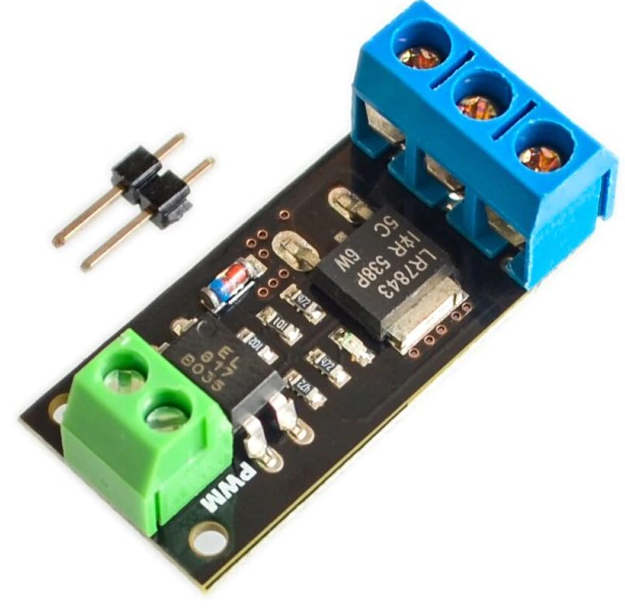
Initially, I had decided I would use the very popular IRF520 module, depicted here:
This module is extremely popular, it supports very high currents and voltages, it's very efficient, and it's incredibly cheap. Practically everyone with an Arduino has used this thing. The catch? The logic level needed to activate this MOSFET module is 5 volts; that voltage is not something I could supply from a GPIO pin of my ESP32 device. I tried it; it didn't work.
It's a super simple device. It's cheap. It can activate with 3.3 volts DC, which means I can use it directly from the ESP32 device. It demands only 2 milliamps of power from GPIO pin through control loop to ground. It can drive the LEDs and the fan I need easily. It's very small. The low- and high-voltage sides are optoisolated. And it's plug–and-play — I barely need to add any component to get this to work! No bring-your-own-transistor, no bring-your-own-resistor — it's ready to go.
Regrettably, mine came with the screw-on terminals not yet mounted... but that's nothing a bit of solder and flux can't fix.
Bill of materials
Since I will be reusing nearly all of the materials I used in the relay build, please refer to that post for details and suppliers of the parts.
Here's what you'll need for this build.
An LED strip, 24 volts DC.
A 24 volt DC power supply.
An ESP32 device compatible with ESPHome.
A 1N5819 Schottky diode.
A MP1584EN / LM2596 DC-DC step-down converter from 24 volts to 3.3 volts.
A breadboard, some loose wiring for breadboarding, and some alligator clip cables.
The MOSFET module in question.
How is the circuit hooked up?
OK. Eager to find out the theory of operation? Let's first look at the wiring.
Have your ESP32 already powered up (3.3 volts and ground).
I think you mau be able to power your ESP32 via USB, so long as the ground between your ESP32 and your higher-voltage power supply is common.
Make sure your ESP32 is programmed (see below for sample code).
Connect ground (of your ESP and your circuit) to GND on the module, and a GPIO output pin from your ESP32 to the PWM terminal on the module.
The ESPHome programming sketch available below uses GPIO27.
Then connect + on the module to the positive terminal of a high voltage (up to 30 volts DC) source; once connected, connect your power source's negative terminal (the ground) to the - pin on the module. This completes the high voltage supply to the MOSFET module.
Connect your load negative to the LOAD pin on the module, and your load's positive to the high voltage supply's positive terminal.
Finally, connect the Schottky diode in "reverse", parallel to your load.
The negative side of the diode goes to the high voltage power source positive.
The positive side goes to the LOAD MOSFET module pin.
The Schottky diode is there to help dissipate any inductance from the load (should the load be like a motor or something similarly inductive). To quote the relevant explanation from the relay build: when the load de-energizes, if the load is inductive, it can dump a large voltage spike"backwards" onto the MOSFET circuitry (this is called back EMF); this can damage the module. With the diode there, under normal conditions current can't flow backwards across the diode and that's all fine, but when the load stops seeing input power and dumps its back EMF, the electricity flows through the diode back into the load, and this gets rid of the voltage spike.
Here is a sample sketch. Create this as a new configuration in your ESPHome setup, then add the code below to the configuration (making sure to preserve the api and ota sections of the configuration you created). After doing so, flash it to your device via serial (your USB port) the first time. Subsequently, you can flash changes via Wi-Fi.
substitutions:
  name: mosfet-tester
  friendly_name: MOSFET tester

esphome:
  name: ${name}
  friendly_name: ${friendly_name}
  name_add_mac_suffix: false

esp32:
  # XTVTX ESP32 (wroom)
  board: nodemcu-32s
  framework:
    type: arduino

# Enable logging
logger:
  level: debug

# Enable Web.
# Turn me off and enable below.
web_server:
  port: 80
  include_internal: true
  local: true

# Enable Home Assistant API
# You'll use your own configuration's API section.
# api:
#   encryption:
#     key: ">API encryption key<"


# You'll use your own configuration's OTA section.
# ota:
#   password: ">OTA password<"

# The following will require you to have these two secrets
# in your ESPHome secrets file.
wifi:
  ssid: !secret wifi_ssid
  password: !secret wifi_password
  ap:
    ssid: ${friendly_name}
    password: password

button:
  - platform: restart
    name: Restart
    entity_category: diagnostic
    icon: mdi:restart
  - platform: safe_mode
    name: Safe mode restart
    entity_category: diagnostic
    icon: mdi:restart-alert

sensor:
- platform: wifi_signal
  name: "Wi-Fi signal strength"
  update_interval: 10s
  entity_category: "diagnostic"
- platform: internal_temperature
  name: "Device temperature"
  update_interval: 10s
  entity_category: "diagnostic"

output:
  - platform: gpio
    # D27 on chip.
    pin: GPIO27
    id: "out_1"

light:
  - platform: binary
    name: Camera light
    id: camera_light
    output: out_1
    icon: mdi:led-strip-variant
Assuming your Wi-Fi credentials were correct, then once the device is flashed, your device will appear in your local network with an IP address given by your router (assuming your home networking setup is like most everybody else's). ESPHome's log screen, which appears immediately after flashing the ESP32 device via USB, should give you the IP address to visit on your browser, but if you get nothing, try looking up the IP address of the device in your router's status or configuration pages.
If, after one minute, the device has yet to connect to Wi-Fi, then it will start up a captive portal you can access with your phone to input the Wi-Fi credentials for your wireless network. Use the captive portal to configure your wireless network into the ESP32 device, and try again.
Bonus exercise: can you turn the circuit into a dimmer? Yes, you can! In the output: section of the sketch, turn platform: gpio into platform: ledc. Then, in the light: section, change platform: binary to platform: monochromatic. Reflash your ESP32 device — you can now control the intensity of the LED strip with a slider!
Check out the circuit in action!
With the IP address of your ESP32 opened up in your browser at http://<the IP address>/, try flicking the light on and off:
What's going on here?
Now let's see how the build works. The circuit is not that dissimilar from our relay build, but let's go over a very simplified explanation of what's going on anyway:
You flick the switch from Off to On.
This causes the GPIO pin on your ESP32 to go HIGH.
When the GPIO pin to HIGH, the base of the MOSFET gets excited, and it begins conducting high voltage between LOAD and and + of the MOSFET module.
Because of that, the LED strip powers on.
You cut power from the ESP to the GPIO pin when you flick the switch from On to Off.
The base of the MOSFET detects this, and shuts off the high voltage path.
The LED strip powers off.
The Schottky diode helps dissipate any inductance on the load.
If you have to TL;DR this sequence of operation, the MOSFET acts much like a relay would. There's an important distinction: unlike in the case of a relay-switched circuit, the low-voltage side sees no inductive reactance when the MOSFET shuts off. When we use the MOSFET, the concern about inductance exists on the high-voltage side.
Can I use this in Home Assistant?
Sure! This circuit is now ready to be added to Home Assistant:
Go to the Devices & Services page in your Home Assistant settings, and you'll see the device has been discovered.
Add it to Home Assistant, giving Home Assistant the API key you supplied in the ESPHome sketch you flashed to your ESP32.
Now you can control your circuit directly from Home Assistant.
]]>
No publisherelectronicshome automationESPHomeESP32Home AssistantDIY (do it yourself)HOWTO2024-03-15T01:33:00ZNews ItemHow to redirect standard output and error of a Python program and its subprocesses to another program
https://rudd-o.com/linux-and-free-software/how-to-redirect-standard-output-and-error-of-a-python-program-and-its-subprocesses-to-another-program
We'll exploit POSIX compatibility to get our way.
I recently had the need to redirect a Python program's output to the system journal. But not just that program's — all its subprocesses too. None of the tricks involving redirect_stdout() work for that set of requirements. Fortunately, there is a very easy way to do exactly this. Here's what you need to put at the very top of your Python program:
#!/usr/bin/python3

import os, subprocess, sys

# Close all stdio except stdin.
os.close(1)
os.close(2)

# Spawn the program we want to log to.  This program must read our output
# via stdin.  Spawn the program with its stdin as a pipe to that effect.
# In this example, we're using the standard logger utility that logs
# all its input to the journal or to syslog, but this could very well be
# a program that outputs to a network, or to a file, or something else.
logger = subprocess.Popen(["logger", "-t", "my-logged-program"], stdin=subprocess.PIPE)

# By the magic of POSIX stdio, that pipe just got assigned file descriptor
# number 1.  This means our program now has standard output connected to
# the logger process above.  But standard error is still closed, so we
# will fix that right in this very line.
os.dup(logger.stdin.fileno())

# Now we have stdout and stderr.  Exercise them!
print("Stdout")
print("Stderr", file=sys.stderr)
# You should see no output on the console.  However, that output should
# still appear on your journal or syslog.
With this trick, stuff like sys.stdout.write() will work as well. And, most importantly, any subprocesses started by your Python program will inherit the stdio of your Python program now — so long as the subprocess handling our stdio is still running, it will receive all child processes' output in its standard input.
Needless to say, the trick above only works on POSIX systems. It will not work on Windows.
]]>
No publisherPythonprogrammingtipsPOSIX2024-03-02T20:04:10ZNews ItemPolkit not logging any debugging information on Fedora?
https://rudd-o.com/linux-and-free-software/polkit-not-logging-your-debugging-information-on-fedora
It's a factory configuration issue, easily solvable.
Earlier today, I was attempting to set up the a polkit (formerly PolicyKit) policy on a system of mine, which I use as a media center and therefore I must be able to control remotely. Part of the work I was doing used polkit.log() to dump some policy information to the system log; polkit is supposed to print to the log whenever polkit.log() is used, but this wasn't working.
Here's the policy in question:
/* Allow Home Assistant to shut down, lock, suspend or log anyone off the system without authentication. */ polkit.addRule(function(action, subject) {
if ( action.id == "org.freedesktop.login1.lock-sessions" ) { polkit.log("Lock sessions sessions permitted for subject" + subject); return polkit.Result.YES; }
}
});
I was having trouble getting it to work, and the polkit.log() stanzas were not producing anything in the journalctl -f journal (as they should, because it's documented behavior).
Curious, I looked into /usr/lib/systemd/system/polkit.service and I found the following:
Whaaat! By default, polkit.log() is suppressed on Fedora, because of that flag!
The fix was easy. I removed the --no-debug from the configuration file, and issued systemctl daemon-reload ; service polkit restart on the console.
Bam! My polkit.log() messages began showing up on the console.
Sure, the removed flag will reappear on that file next time polkit is updated, but I don't care about that — I only needed to see the messages today.
For anyone who wants to know, here is the shell program that specific system uses to let a remote system manage various aspects of it via SSH using polkit policies instead of sudoers root access. The program below is set as a shell of the local user designated for remote management.
#!/usr/bin/python3

import os, shlex, subprocess, sys


testing = False

os.close(1)
os.close(2)

logger = subprocess.Popen(["logger", "-t", "assistantsh"], stdin=subprocess.PIPE)
os.dup(logger.stdin.fileno())
logger.stdin.close()

def report(msg, *args):
    if args:
        msg = msg %args
    print(msg)

if not sys.argv[1:] or sys.argv[1] != "-c":
    report("rejected command line %s", sys.argv[1:])
    sys.exit(8)

args = sys.argv[2:]

if args == ["poweroff"]:
    report("powering off")
    if testing:
        sys.exit(0)
{% if is_vm %}
    os.execv(
        "/usr/bin/qrexec-client-vm",
        [
            "/usr/bin/qrexec-client-vm",
            "dom0",
            "admin.dom0.Poweroff",
        ]
    )
{% else %}
    ret = subprocess.run(
        [
            "/usr/bin/systemctl",
            "poweroff",
            "-i",
            "--no-ask-password",
        ],
        capture_output=True,
        text=True,
        check=False,
    )
    if ret.returncode:
        report(f"failed to power off ({ret.returncode}): {ret.stderr}")
    else:
        report("successfully powered off")
    sys.exit(ret.returncode)
{% endif %}
elif args == ["loginctl lock-sessions"]:
    report("evicting and locking sessions")
{% if is_vm %}
    if testing:
        sys.exit(0)
    os.execv(
        "/usr/bin/qrexec-client-vm",
        [
            "/usr/bin/qrexec-client-vm",
            "dom0",
            "admin.dom0.Lock",
        ]
    )
{% else %}
    ret = subprocess.run(
        [
            "/usr/bin/loginctl",
            "terminate-seat",
            "seat0",
            "--no-ask-password",
        ],
        capture_output=True,
        text=True,
        check=False,
    )
    if ret.returncode:
        report(f"failed to lock sessions ({ret.returncode}): {ret.stderr}")
        sys.exit(ret.returncode)
    else:
        report("successfully evicted sessions")
    ret = subprocess.run(
        [
            "/usr/bin/loginctl",
            "lock-sessions",
            "--no-ask-password",
        ],
        capture_output=True,
        text=True,
        check=False,
    )
    if ret.returncode:
        report(f"failed to lock sessions ({ret.returncode}): {ret.stderr}")
    else:
        report("successfully locked sessions")
    sys.exit(ret.returncode)
{% endif %}
elif args == ["systemctl suspend"]:
    report("suspending system")
{% if is_vm %}
    if testing:
        sys.exit(0)
    os.execv(
        "/usr/bin/qrexec-client-vm",
        [
            "/usr/bin/qrexec-client-vm",
            "dom0",
            "admin.dom0.Suspend",
        ]
    )
{% else %}
    ret = subprocess.run(
        [
            "/usr/bin/systemctl",
            "suspend",
            "--no-ask-password",
            "-i",
        ],
        capture_output=True,
        text=True,
        check=False,
    )
    if ret.returncode:
        report(f"failed to suspend system ({ret.returncode}): {ret.stderr}")
    else:
        report("successfully suspended system")
    sys.exit(ret.returncode)
{% endif %}

report("rejected command %s" % args)
sys.exit(16)
This shell program is invoked (via passwordless SSH, using an SSH key for authentication) by Home Assistant on the remote system. Here's a relevant snippet of the Home Assistant configuration that will call upon this program on the machine to be managed (in this sample it's called roxanne):
# Provide the necessary commands to run actions on the machine.
shell_command:
  lock_roxanne: /usr/bin/ssh -o "BatchMode yes" -o "ConnectTimeout 30" assistantsh@roxanne loginctl lock-sessions
  suspend_roxanne: /usr/bin/ssh -o "BatchMode yes" -o "ConnectTimeout 30" assistantsh@roxanne systemctl suspend
  turn_off_roxanne: /usr/bin/ssh -o "BatchMode yes" -o "ConnectTimeout 30" assistantsh@roxanne poweroff

# Quality of life enhancement: buttons to suspend and lock / log out.
template:
  - button:
    - name: Suspend roxanne
      press:
        service: shell_command.suspend_roxanne
      unique_id: suspend_roxanne
    - name: Lock roxanne
      press:
        service: shell_command.lock_roxanne
      unique_id: lock_roxanne

# Standard Wake-on-LAN switch with a command to turn off the machine.
switch:
- platform: wake_on_lan
  mac: th-em-ac-ad-dr-es
  broadcast_address: th.eip.add.res
  name: roxanne
  host: roxanne
  turn_off: {
    "service": "shell_command.turn_off_roxanne"
}
And that is all.
]]>
No publishertipsFedoraLinuxsystem administrationinformation securityHome Assistanthome automationprogramming2024-03-02T19:26:00ZNews ItemHow to raise a window under Wayland or X11 when using KDE / KWin / Plasma
https://rudd-o.com/linux-and-free-software/how-to-raise-a-window-under-wayland-or-x11-when-using-kde-kwin-plasma
The old methods to activate Linux desktop windows no longer work well, but new methods have been invented already.
Under the old X11 regime, a bit of xdotool windowactivate magic used to do the trick when it came to raised windows.
Not so in Wayland anymore. Sadly, Wayland has no protocol that user-space applications can lean on to raise a window.
However, if your desktop session uses KWin (e.g. under a KDE Plasma session), this is certainly possible. Not only is it possible, it will work equally well whether your session is running under X11 or Wayland!
The following code is a Python script you should place under /usr/local/bin/kwin_wmgmt_helper and make executable. Ensure you have both Python and the pydbus library installed on your system as well. How the program works, and how to use the program is explained below.
#!/usr/bin/python3
import hashlib import os import pydbus import subprocess import sys
def usage(): print( "usage:\n\n" f" {sys.argv[0]} <window title regexp> [optional command and args if not found]\n" f" {sys.argv[0]} --class <window class> [optional command and args if not found]\n" f" {sys.argv[0]} --dump\n" "\n" "Returns 1 when the window is not found, 0 when it is.\n" "\n" "If an optional command (with or without arguments) is specified" " then the command will be run if the window is not found.\n" "\n" "--dump makes KWin dump to the journal a list of clients with their" " window titles and resource classes. You can retrieve this list by" " running journalctl _COMM=kwin_wayland under Wayland.", file=sys.stderr, ) sys.exit(os.EX_USAGE)
if not optional_cmd: sys.exit(0 if wm.found else 1)
os.execvp(optional_cmd[0], optional_cmd)
The small program above does the following, when you invoke it as such: kwin_wmgmt_helper Kodi
It tells KWin, using a script loaded via hot code reloading, to look for a window titled Kodi (specifically, searching that regular expression in the window title of all running applications).
If KWin finds the window, then it calls back to the program (via D-Bus) confirming the window was found. If not, then it tells the program the window was not found.
If the window was found, KWin will raise the window for you.
Depending on the message the program receives from KWin, it will either exit with success (0) status if the window was found, or failure (1) if the window was not found.
This makes the program extremely useful for scripting desktop automation scenarios. I myself use it in Kodi — with my XDG desktop menu add-on for Kodi — to bring up specific applications that are already running on my desktop, instead of launching them. If I open Chromium, after all, I don't want to open another window of Chromium — I want to raise the window that's already open.
Other ways you can invoke the program as:
kwin_wmgmt_helper --class google-chrome finds a window whose class matches google-chrome, and raises it.
kwin_wmgmt_helper Konsole konsole finds a Konsole window and raises it; if it can't find Konsole, it will execute the konsole command instead.
kwin_wmgmt_helper --dump makes KWin dump a list of open window names and classes to the system journal. You can look at it using journalctl (peruse the last few dozen lines).
]]>
No publisherLinuxKDEdesktop computingWaylandautomationtips2024-02-29T17:31:30ZNews ItemIs it capitalism?
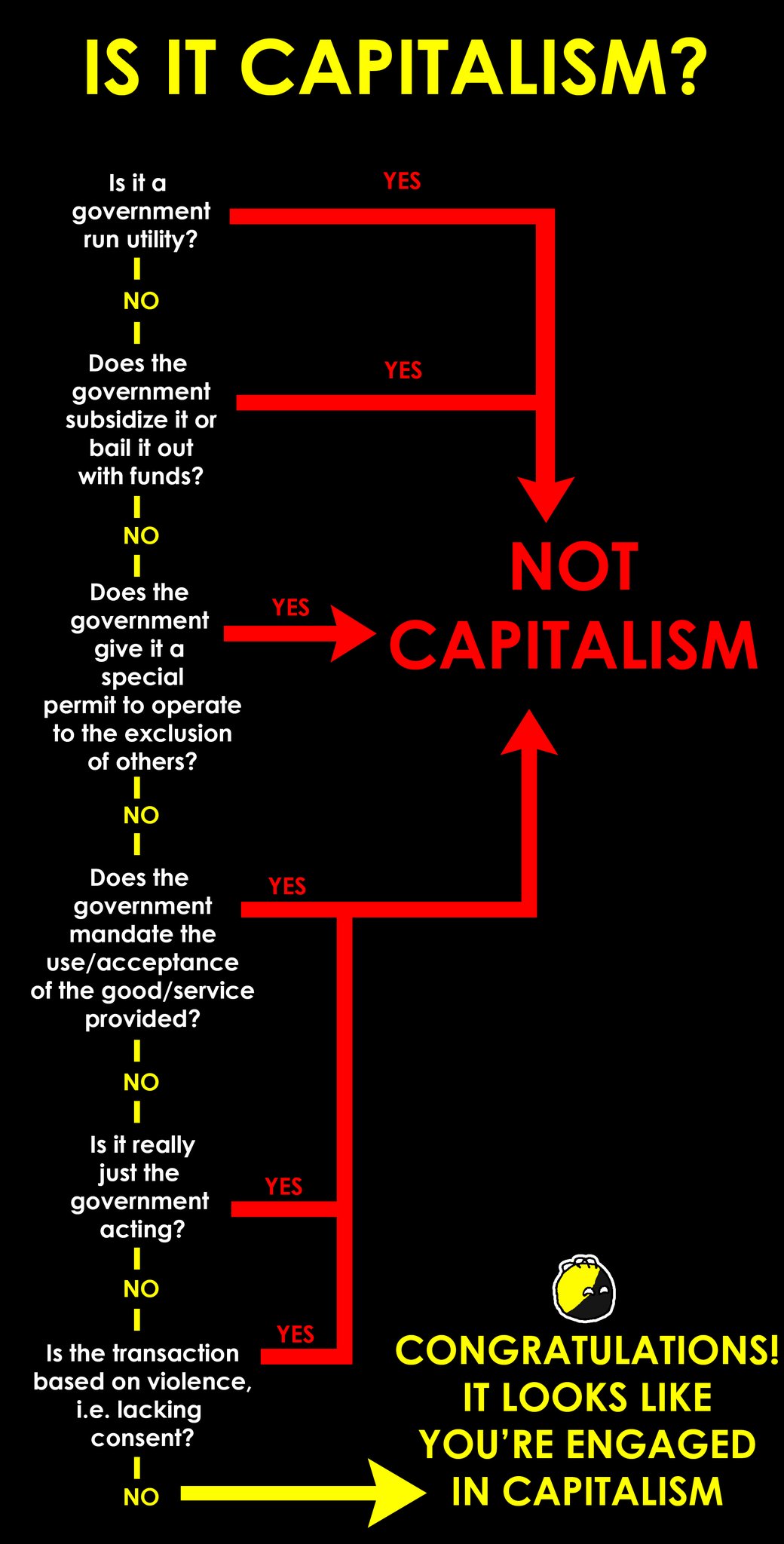
https://rudd-o.com/archives/is-it-capitalism
A handy chart.
]]>
No publishercapitalismeconomicspolitics2024-02-26T22:29:09ZPictureHow to control a 24 volt LED strip using an ESP32 and ESPHome
https://rudd-o.com/linux-and-free-software/how-to-control-a-24-volt-led-strip-using-an-esp32-and-esphome
It's wireless-connected smart circuit time, fully compatible with Home Assistant. Follow along to build your own smart LED strip lighting at home.
One of the alternatives is to use a relay to drive the LEDs and fan, all controlled by an ESP32 device. I didn't want to use a relay, and I still don't (I will likely end up using a MOSFET module, since MOSFETs are silent, and relays are not). That said, I still had to try the relay option, just to learn how it works.
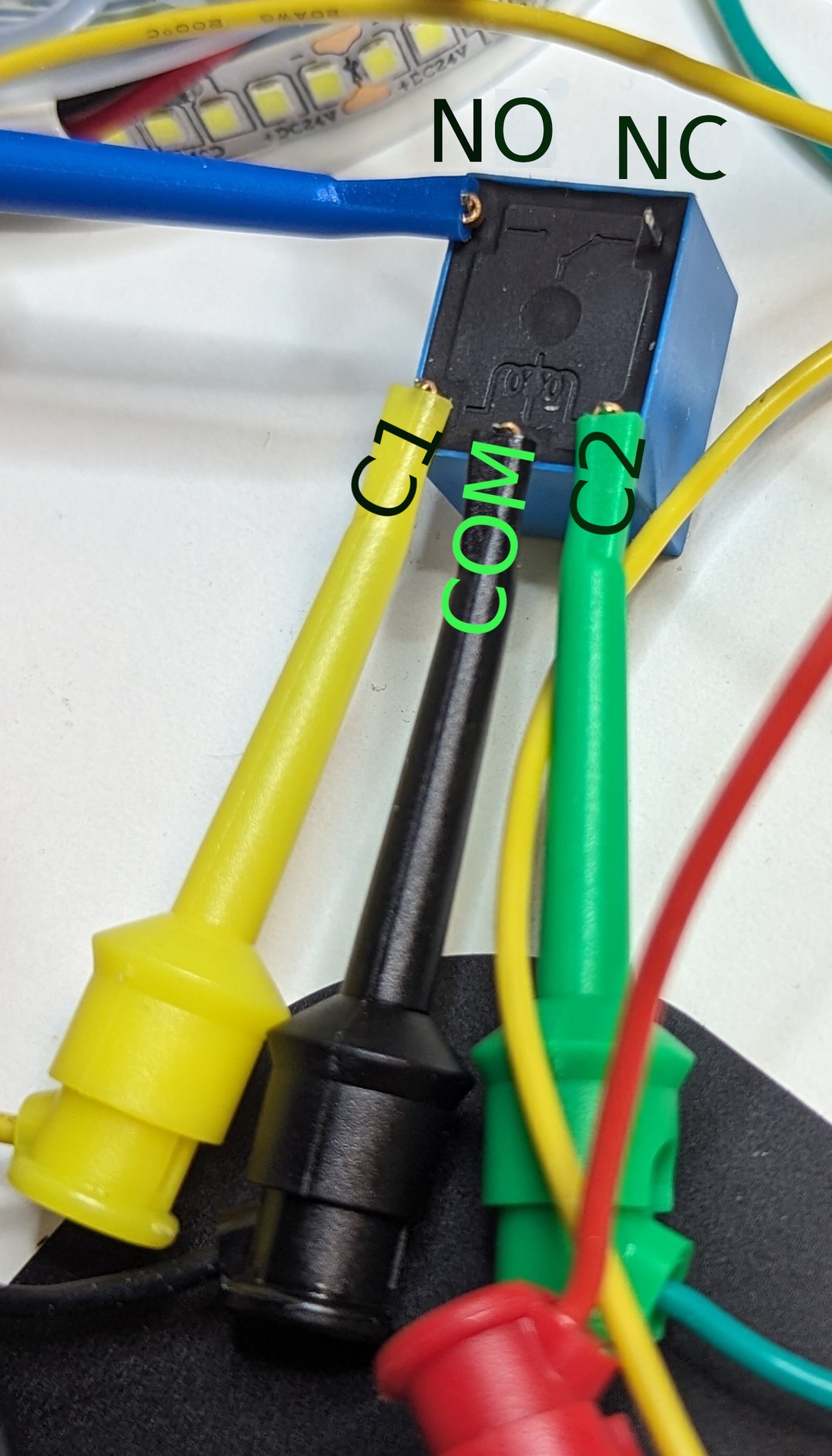
You use relays when you need on/off control of a high voltage or current, driven by a low voltage low current device (like an ESP32). The way a relay works is, it has an internal coil that moves a switch from "off" to "on" (connecting common pin COM to normally-open pin NO) when the coil is energized across its two pins C1 and C2 by the specified voltage, producing a satisfying click when this action happens. When the voltage across the coil is not there, some relays (of the SPDT — single pole dual throw — type) bridge COM to normally-closed NC.
This project will be built on ESPHome, and is therefore natively compatible with Home Assistant. In other words, the ESPHome sketch you will program on your ESP32 device should be immediately addable to your Home Assistant instance — you can control your LED strip directly from your Home Assistant dashboard.
I originally bought some relay modules (which come ready-to-be-plugged into an ESP32 device), but the weirdos who sold me the modules at AliExpress did not send me modules — they just sent me bare relays. So I had to make myself, with low-level components, the equivalent switching network to a relay module. I have laid out in detail why each component is necessary.
Bill of materials
Here's the bare minimum you'll need to get you started.
12 volt strips will work too, but adjust your power supply.
Make sure you buy LED strips that don't require a PWM driver. Quite a few on the market will need that. Relays can't do that. Generally, if a strip is specified to require a driver instead of a simple power supply, that strip can't be used here. An explainer on constant current vs. constant voltage can be read here.
A 24 volt DC power supply.
Make sure it has enough power to drive your LED strip (check the amperage rating, mine is 2 amps across all 5 meters) and the ESP32 device (0.2 amps).
It's also possible to use a 12 volt supply, so long as your LED strip supports it.
The supply must be constant voltage.
In this demo, I'm using a bench power supply just to test, but any standard modern power supply should work.
Do not power an LED strip that is rolled up for more than a few seconds. It will overheat. It must be unrolled first.
In an electrical circuit schematic, green dots in crossing lines mean these lines are connected — when there is no dot in a crossing, those lines are not connected.
First, the basics:
The ESP32 device needs power, so connect the positive out of the LM2596 converter to the 3V3 pin on the ESP32. Connect the ESP32 GND pin to negative out (this is also ground).
Connect the LM2596 converter positive in (has a plus) to 24 volts, and the converter's negative in (has a minus) to ground.
With that, you have power on the chip. You should be able to program and test it now — use the ESPHome software sketch below.
Be careful! Do not mistake the input for the output — you'll fry the converter (ask me how I learned this!) Remember: the converter input takes 24 volts, and the output produces 3.3 volts. The input goes to the supply, the output goes to the ESP32 voltage pin.
Now, the switching network. This network runs exclusively at 3.3 volts; the circuit for switching is composed of the resistor, the transistor, the Schottky diode and the relay module. The general way it works is:
Your ESP32 device produces a 3.3 volt output, which (current-limited by the resistor) excites the base of the transistor.
Once the transistor is excited, it "opens the door" for electricity to flow between its other two legs.
One of the legs of the transistor is hooked to ground, and the other is attached to one side of the coil of the relay — the other side of the relay coil will be powered by 3.3 volts.
So, when the transistor is open (by orders of the ESP32), 3.3 volts pass from the 3.3 volt source through the relay coil to ground — switching the relay on.
Finally, a Schottky diode is needed (connected "backwards") on the two legs of the relay coil, because when the coil de-energizes, not only can arcing inside the relay occur, it can dump a large voltage spike"backwards" onto the transistor (this is called back EMF); this can fry the transistor. With the diode there, under normal conditions current can't flow backwards across the diode and that's all fine, but when the coil dumps its back EMF, the electricity flows through the diode back into the coil, and this gets rid of the voltage spike.
Here's how you wire this up:
Connect GPIO27 on the ESP32 device to one side of a 200 ohm resistor.
This resistor is needed to ensure that only 10 mA of current go out the GPIO pin, otherwise you'd fry the ESP32 device shortly.
Yes, I did measure the current — only 10 mA, well within the specifications of what the ESP32 can deliver through GPIO.
The other side of the resistor goes to the base of the 2N2222 transistor — the base is the middle leg.
Connect the emitter of the transistor to ground. If you look at the transistor directly at its "flat face", the emitter is the left leg.
Connect the collector (the right leg) of the transistor to:
the anode of the Schottky diode (the side that has no grey stripe), and
pin C1 on the relay.
Connect the relay pin C2 to:
the cathode of the Schottky diode (the side that has a grey stripe), and
the 3.3 volt rail also connected to the ESP32 3V3 pin.
Here is an annotated close-up of the transistor and the Schottky diode, and how they should be wired up:
And here is an annotated picture of the relay (upside down, on its belly):
That completes the switching network.
Finally, the load network. This one runs at 24 volts:
Connect the COM pin on the relay to the ground of your circuit.
Connect the NO (normally open) pin on the relay to the negative wire of your LED strip.
This pin is always disconnected, so the circuit is open, when the relay is not energized.
Connect the positive wire of your LED strip to the 24 volt rail of your power supply.
Here is a sample sketch. Create this as a new configuration in your ESPHome setup, then add the code below to the configuration (making sure to preserve the api and ota sections of the configuration you created). After doing so, flash it to your device via serial (your USB port) the first time. Subsequently, you can flash changes via Wi-Fi.
esp32: # XTVTX ESP32 (wroom) # You may have to change this if the ESP32 device # you bought is a of different type. board: nodemcu-32s framework: type: arduino
# Enable Home Assistant API # You'll use your own configuration's API section. # api: # encryption: # key: "<api encryption key>"
# You'll use your own configuration's OTA section. # ota: # password: "<OTA password>"
# The following will require you to have these two secrets # in your ESPHome secrets file. wifi: ssid: !secret wifi_ssid password: !secret wifi_password ap: ssid: ${friendly_name} password: password
Assuming your Wi-Fi credentials were correct, then once the device is flashed, your device will appear in your local network with an IP address given by your router (assuming your home networking setup is like most everybody else's). ESPHome's log screen, which appears immediately after flashing the ESP32 device via USB, should give you the IP address to visit on your browser, but if you get nothing, try looking up the IP address of the device in your router's status or configuration pages.
If, after one minute, the device has yet to connect to Wi-Fi, then it will start up a captive portal you can access with your phone to input the Wi-Fi credentials for your wireless network. Use the captive portal to configure your wireless network into the ESP32 device, and try again.
Time to see it in action!
Once you have the IP address of your ESP32 device, visit the Web site http://<the IP address>/. This is how the whole thing will look like in action:
The sample you see on video has some differences from what you'll get in the sample sketch. For example, you'll get Camera light, but you won't get Camera light switch, since the sketch I pasted above is simplified to just control the LED strip.
So what's going on here?
The switch onscreen is flicked to on. This goes through Wi-Fi to the ESP32.
The ESP32 sends a signal to the transistor.
The transistor, in turn, activates the relay.
When the relay activates, 24 volts flow through it, and that causes the LEDs to flick on.
When the switch is flicked off, the opposite happens, and the relay deactivates.
As the coil in the relay, deactivates, a large back EMF spike (microseconds in duration) is sent by the relay in the opposite direction.
The Schottky diode aids in dissipating it to protect your ESP32 and your transistor.
Once the relay coil is fully deactivated, the LEDs turn off
And that concludes our adventure!
]]>
No publisherelectronicshome automationESPHomeESP32Home AssistantDIY (do it yourself)HOWTO2024-02-17T05:46:00ZNews ItemHow to stop climate loons blocking roads and trashing museums
https://rudd-o.com/archives/how-to-stop-climate-roadblocks-and-trashing-of-museums
Devon Eriksen tells us why climate grifters use these tactics and how to stop them.
Classical liberal societies are hackable because they tend to set higher and higher values on human life and safety over time.
Eventually, society reaches a state where the worst non-violent thing is held to be less bad than the mildest sort of violence necessary to stop that that thing.
It then becomes effectively illegal to stop anyone from doing that thing. In this social state of affairs, a grifter can victimize people in any way he chooses so long as he:
Doesn't use violence.
Can only be stopped by violence.
Shoplifters can stop employing stealth altogether and simply loot stores, knowing that they cannot be caught or punish, because store owners will be punished more severely for dishing out a beating, or simply restraining them for the police, than the punishment for theft.
Youtube "pranksters" can harass and threaten innocent people, knowing that standing six inches from someone and screaming in their face, or yelling to bystanders that some innocent person is a child rapist, will be punished less severely, if at all, than the beatdown / pepper spraying that this behavior invites.
Self-styled protestors can block the arteries of civilization, knowing that driving a car over them, which is the only response available to drivers, will be punished as murder, while they themselves would be unlucky to be charged with an infraction.
These are all people who have learned to hack classical liberalism, and I'm sure you can think of more examples.
So what is to be done?
First, the inhabitants of classical liberal society must realize that property is freedom.
If we cannot protect that which we build and invest in, that means we are not free, because our choices, our self-determination, and even little pieces of our lives, are being taken away from us by those who can deprive us of our property at will.
This means that we must mentally free ourselves from the attitude that violence is unacceptable. Instead, when confronted with a property crime, or an assault on our dignity or liberty, we must normalize the use of the minimum amount of force that will reliably and safely stop it.
Note that I say "normalize", not "legalize".
Legalizing is an act of the government, and in states where the government is willing to do this, this sort of thing isn't a widespread problem. No one is blocking roads in Tennessee, Idaho, or Montana, because they know the consequences would be swift and unpleasant.
In California, Chicago, Oregon, western Washington, and so on, the state will not put a stop to these things, because it wants them to happen.
So those of you who are forced to live in those states, and are unable to leave, must normalize beatdowns.
Yes, your state and local governments will want to punish you for playing rough with their beloved criminal underclass, and their precious insane hobos and bums.
But you must realize what the criminals and bums realized long ago... the police and the state are not ubiquitous, and their power to catch and punish you is much more limited than you think.
Yes, they will go after you much harder than they go after thugs, bums, and commies, because thugs, bums, and commies are their constituents and you are not.
But that's what "normalize" means. It means make normal. You all have to start doing it, or at least a lot of you. Because one or two people can be made an example of, but normal behavior cannot.
How long would this continue if every group of roadblocking communist agitators were beaten by a mob of angry motorists who carry a pair of thick socks and a set of Chinese mediation balls, or a bar of soap, in their cars?
You have to take your states back. Your governments will not do it for you. This whole thing was their idea. You have to realize they are the enemy, stop petitioning them to protect you, and start protecting yourselves.
]]>
No publisherpoliticsgriftingpropertycultural Marxismclimate panic2024-02-08T03:48:00ZNews ItemMaking a smart enclosure for the Original Prusa MK4
https://rudd-o.com/linux-and-free-software/making-a-smart-enclosure-for-the-original-prusa-mk4
Electronics, ESPHome, and Home Assistant to the rescue.
I recently bought an Original Prusa MK4 with its enclosure (which was quite the labor to put together!). The printer has turned out to be a fantastic purchase — I couldn't be happier with it.
Prusa MK4 printers are fully compatible with Home Assistant — they have their own built-in integration that allows limited control of prints, and lets the user see the status + a preview of the printout. On that basis, I've already made a dashboard for myself, so I can monitor printing time and state.
Since I'll be printing filaments that emit styrene and other noxious gases, in addition to the enclosure I also ordered the advanced filtration system (and its requisite base board + power supply). The base board and supply can also power and control an LED strip (24 volts), and the board includes a two-push-button front panel to turn the light and the fan on and off (not depicted here).
While my LED strip is still not here, I could still have put all of this together, and be ready to print noxious filaments. However, as you can see, I haven't yet put together the advanced filtration system. Why?
What does "a smart enclosure" mean?
To me, it means:
Things that need to happen must be automatic:
I shouldn't have to push a button to run the fan. If the filament I've set the machine to print with is not one of the known non-toxic filaments, the fan shouldn't run needlessly.
However, in any other case, the fan should run for the entire duration of the print, and keep going 15 minutes after the printer.
Then, the fan should be quiet.
Perhaps the fan should auto-run only when there are contaminants detected in the enclosure, regardless of whether there is a print going on.
Functionally and aesthetically, it should remain "stock":
"Digital buttons" notwithstanding, the push buttons on the base board (which attaches to the front panel) should operate correctly, allowing me to manually start and stop both enclosure light and filtration fan as I please.
Aesthetically, it should look as close to an unmodified Original Prusa enclosure plus the add-ons Prusa Research sells.
Stretch goals:
Video dashboard!
There should be a camera (ideally a device like an ESP32-CAM) filming, that allows me to view what's going on through my Home Assistant office dashboard.
When the camera is filming, the enclosure light should automatically come on. This should be pretty easy to accomplish with Home Assistant, since an automation can turn the light on when the camera begins streaming, and the light can then be turned off when streaming stops.
Fan speed control!
It should be possible to make the fan spin faster the more contaminants in the enclosure are detected.
The fan can be quite noisy at top speed; it should also be possible for the user to define at what speed the fan should spin.
A short, low-speed run of the fan can be used to periodically whiz contaminants past a sensor, and then use this to detect if the air is clean or not. Dyson filtering fans do this when set to automatic mode.
The technical parts can be done with an ESPHome-programmed ESP32 device. The aesthetic and functional parts can be done with a little care.
This post explores doing exactly that.
Before we start
You may want to read my series of guides on powering various electric devices using ESPHome and cheap electronics. This is background knowledge that will help you understand the details of the electronics we'll be building in this post:
Many of the components mentioned in those guides will be featured in this guide.
What you'll need
ESP32
I need a circuit that does all of the above. For that circuit to become real, there are a few items I need to add to my shopping list:
First, I'll need an ESP32. ESP32s are microcontrollers from Espressif that (1) are very cheap (2) are very versatile (3) consume very little power (4) feature a lot of options for input and output, from GPIO through Bluetooth to Wi-Fi.
For this project, I've chosen the Freenove ESP32-S3-WROOM, which can be found on AliExpress and on Amazon for a few bucks. This ESP32 comes with a fairly well-sized antenna, and a connector that accepts both OV2640 and OV5640 cameras.
Camera
I'll need a camera for the ESP32 device. The OV2640 camera that comes with the Freenove ESP32 has decent frame rate, but suffers from bad picture quality. An OV5640 camera with a 120 degree angle will fit the bill in its stead.
These cameras need thermal dissipation because they can get extremely hot, so you'll have to purchase a copper heat sink and double-sided thermally conductive tape. Do not omit the purchase of the conductive tape, even if the heat sinks appear to ship with it — the tape that ships with these heat sinks is thermally isolating, and therefore would be very bad for your camera. You may also substitute the tape for self-adhesive thermal pads you can cut to size.
MOSFET power module
I'll need one MOSFET module. I bought my MOSFET modules from here. These modules are needed because the LED strip requires 24 volts and over 50 watts of power together (supplied by the power adapter Prusa ships), but the ESP32 device "speaks in 3.3 volts" and can only safely do 20 milliwatts per GPIO pin (before giving up the magic smoke). The fan will run with 24 volts, but it won't need a MOSFET module — we'll be using using direct-from-ESP32 PWM control to control the state of the fan.
DC-DC converter
I'll also need a MP1584EN / LM2596 step-down DC-DC converter, to take the 24 volts of the power supply and convert them into 3.3 volts that the ESP32 device needs. The photos below show how the board looks like almost exactly, but it may arrive with a chip that says 150 instead of 100 — this is fine.
Printed circuit board
I will need a PCB layout. Download this PCB layout, then order it printed through a PCB printing business like JLCPCB. To this layout we'll mount all the electronic components. For reference, this is how the board (as of version 1.2) looks like:
Electronics case
The electronics you'll put together will need a case.
The case consists of three independent friction-fit parts you'll assemble and install within your MK4 enclosure later on.
Download, slice and printthis electronics case using your favorite PLA+ filament, at 0.2mm layer height in structural input shaper mode.
The download has a FreeCAD file and a 3MF file directly printable using PrusaSlicer; the 3MF file in the provided download is currently set to print using a Sunlu PLA+ filament, but you can change that before slicing.
Important print settings to double-check in your slicer: support angle threshold at 40 degrees, organic support types, print all parts sitting on their largest flat contiguous surfaces. The most elegant color for the print to be seamless within your enclosure is black.
Screws and nuts
To affix the electronics case to the enclosure, you'll need two M3x4 hex head screws and matching nuts (maximum 3mm thick). You may get away with using the excess rivets that shipped with your Prusa MK4 enclosure, but since the enclosure also ships with excess M3x4 hex screws and nuts you might as well use the bolts and nuts. The screws have two key advantages over the rivets: they tighten parts much more snugly than the rivets, and they will look stock in the final build.
If you only have M3x8 screws, and you are careful, you can cut them up to half their length and they will work too.
Lighting
The enclosure needs lighting. To that effect, you'll need a 24 volts DC LED light.
You can purchase a fully assembled and working LED light, ready to be mounted somewhere within your enclosure, if you so prefer — this will save you a lot of labor. Just make sure that the LED is 24 volts and consumes less than 1 ampere. Prusa Research sells an LED strip that can be mounted easily to the enclosure.
For this project, I bought a 5 meter self-adhesive LED strip that works with 24 volts DC and can be cut to size. This will work perfectly with the power supply sent by Prusa Research, and will illuminate the printed parts from above.
I will not be using the entire roll! Rather, I'll cut as much of the power strip I think it's necessary to illuminate the enclosure well for the camera to work at night, and then strategically place the segments (interconnected in series) on the roof of the enclosure to illuminate the printout.
For the record, at 24 volts supplied, the roll consumes about 2 amperes — just this load alone would overwhelm the power supply that came with the base board. Whichever LED lighting you choose, be sure not to exceed 1 ampere at its final sizing.
Never power the strip while on its roll for more than a few seconds at a time — you can overheat and burn it that way.
Wiring
Some wiring will be necessary as well. To wit:
Get some insulated two-lead 22AWG wire to bring power to the lighting. One of the sides will need to be soldered (or crimped) into the input wiring of the lighting; the other side will hook up to the PCB using a JST XH connector (see below).
Get insulated ribbon cabling to attach the other, non-power-demanding components. I bought this 10-lead ribbon wire from Amazon. This cabling does not need to be thick-gauge since it will not be carrying high currents. Any ribbon wire with 4 leads or more will work here — you will only use 4 of the leads when making cabled interconnects.
Optional: connector modules for DIY LED array assembly
I will use short segments of 22AWG wire to solder LED segments in my DIY LED strip. This could be a lot of work you may want to avoid.
There is a solution to avoid this soldering labor: these solderless LED strip connection modules exist and you can purchase them. Make sure you purchase the right kind of connection modules — in my case, the strip I will use is 10mm wide so I will purchase get the 2-pin 10mm units.
To make your life a little easier, you can choose to get both strip to wire as well as the strip to strip modules — but anything that lets you crimp a two-lead wire to the LED strip is fine.
stable connection points can be created on the PCB,
the 4-wire and 2-wire cables (of the exact lengths we need) can be created, and
the connector that ships with the fan cable can be replaced with the JST-XH connector that the PCB requires.
Auxiliary PCB parts
Get PCB pin strips to attach some components to the PCB board. These pins fit the holes of the breadboard as well as the components, can be broken off individually, and any excess length is easily cut with wire trimmers.
Get a female 5.5 / 2.1 through-hole barrel socket to take up the 24 volts produced by the Prusa Research power supply. Alternatively, you can purchase 5.5 / 2.1 mm barrel sockets with built-in cables. Here are photos of a through-hole barrel socket and wired barrel sockets / plugs:
I will need a fuse holder and a 2 amp fuse. The fuse holder can be obtained here(it's depicted below) and the fuses can be these (but it's on you to check that they really do blow at 2 amps). The fuse is important for safety. They usually come with protective lids, but you won't use the lid on your project's fuse holder, since the electronics case already has a lid.
Air quality sensor
Optionally, you can add an air quality sensor to your project.
While any I2C sensor with 3.3 volt power should work, I've chosen the BME688 from Bosch, in convenient SparkFun packaging form. The project will include code to enable this sensor, should you get one for your own setup. Do not touch the silver metal casing of the sensor at the center of the board.
You can use any air quality sensor you prefer (if, for example, you care about particulate matter instead of gases). There are many sensors good for ESPHome use, but any sensor you choose must be 3.3 volt-powered and must support the I2C communication protocol. Of course, if you choose a different sensor, you will have to alter the ESPHome programming of your smart enclosure to work correctly — refer to the ESPHome documentation for your chosen sensor.
Passive components
In addition to the parts above, you'll need a few electronics components that can be found pretty much anywhere online (and would be available in Radio Shack, if Radio Shack still existed in its original form):
One through-hole resistor 5000 Ω (5K1) in value, and another through-hole resistor 4600 Ω (4K7) in value.
They will be used to limit current going to the PWM pin of the fan, and current coming from the tachometer pin of the fan.
In a pinch, two 4600 Ω resistors would work, and two 5000 Ω resistors might work.
One through-hole ceramic non-polar 151 (150 pF) capacitor.
This cap will filter transients in the PWM signal for the fan.
Two through-hole Schottky diodes, part number 1N5819.
They will help rapidly unload reactive currents (back EMF spikes) from the motor of the fan and the LED strips, when they are switched off.
This blog carries a tutorial on how to govern high voltage loads using relays, which explains back EMF spikes — you should read it.
You will need a soldering iron, some flux you can apply onto the PCB, and a roll of rosin core solder.
I recommend you own a simple multimeter with alligator clips, and some DuPont wires. These will be extremely useful to test for voltages and continuity. Without a multimeter, you are generally flying blind. Cables with retractable hooks on both ends will also be very useful for testing.
As far as other tools go, you will definitely need wire cutting pliers. Have a pair of thin needle-nose pliers too — you'll use them to crimp JST XH pins in some circumstances.
Have some Kapton or electrician's insulating tape around, as well as some heat-shrink tubing suited for AWG22 wire.
Software
Finally, on the software side, we'll use ESPHome. ESPHome is software that makes it extremely easy to program these ESP32 devices; instead of having to hand-roll C++, all I have to do is put together a YAML file (which I'll supply below) and this puts together all the functionality we need from the circuit, almost straight into the ESP chip.
FIXME explain that the microcontroller needs to be programmed here, because once on the board, USB ports are not accessible.
FIXME the web server must be uncommented. The user must be instructed to comment it out later, if he plans to use Home Assistant. Same goes for the MJPEG streaming endpoint.
FIXME instruct the user of the existence of the Web server.
FIXME camera and I2C sensor parts of the code must be commented out to prevent errors when testing. The user must be instructed to uncomment that part later, and reprogram the ESP wirelessly.
Build the hardware
Prepare the camera
Follow these steps to prepare the camera for use:
Do each following step with the camera lens cover on.
Many of the heat sinks for small devices usually come with a double-sided 3M backing tape. You need to remove every trace and bit of that tape, because that tape is actually thermally isolating. Use isopropyl alcohol or another solvent to clean the back of the heat sink.
Place the heat sink upside down.
Cut an appropriately sized square from the thermally conductive tape, and firmly affix it to the heat sink. Make sure no bubbles are under the tape; start over and repeat the process if you see any. Cut any excess protruding from the sides of the heat sink.
Peel off the other side of the tape, and affix the heat sink with the tape squarely in the center of the back of the camera (which should have a metal backing). Keep the camera covered with its built-in cover while you do this, so as to not impregnate the lens with grime or skin oils.
Once your camera has its heatsink properly installed, friction-fit the camera onto the camera support part of the electronics case you printed. Thread the ribbon cable of the camera through the vent hole at the top of the camera support part. The fit should go around the neck of the camera, it should be snug, and it should look like this:
Prepare the fan
Since the fan comes with a CLIK-MATE connector, but we're using JST XH connectors in this project, we are going to have to re-pin the cable, and then insert the pins into the JST connector.
A quick primer on making JST connectors well
The process is somewhat complicated, requiring the specialized JST crimping tool to do it fast, although it can be done (very carefully and very slowly) with a pair of thin needle-nose pliers as well. If you're using the tool, here's a video full of macro shots that teaches you in detail how to do it; the process described is as follows:
Cut the existing connector from the four-lead flat cable of the fan.
Separate the four leads from each other roughly an inch long.
Strip the end of all four leads to expose 2 millimeters of wire strands.
For each lead, do as follows:
Carefully insert the lead from the side of the long wings until the lead "stops".
The bare wire must be where the short wings (at the center of the pin) are, and the insulation must be where the long wings are.
Do not bend the strands or over-insert the lead — this will interfere with JST connection mating and can cause a short circuit.
Crimp the wings of the pin around the lead using your tool or needle-nose pliers, making sure that the end of the pin (square-shaped, with a tiny spring) is not damaged in any way.
Ensure that the short wings have tightly clamped on the bare wire strands, and the long wings are tightly wrapped around the insulation of the lead.
Tug on the wire with reasonable force, while holding the pin firmly. The lead should not come out of the pin. If it comes out, start over again from the top.
Insert the finished pin with lead into the JST socket.
The crimped pin goes into the channel only one way: the tiny spring aligned with the window (tiny hole) at the end of the bottom of connector, where the spring will lock and it will no longer be possible to remove the pin.
The spring of the crimped pin should somewhat click into place once it gets all the way in.
You may want to use the tip of a paper clip to push the pin all the way in.
The order in which the pins must be inserted is as follows: with pins 1 to 4 of the connector facing up♣, the negative lead (that's the lead with dashed white markings on its insulation) goes into pin 1 of the connector. Then the rest of the pins go in the same order as they are on the cable.
Here is the instruction video on how to use the crimping tool I mentioned earlier. This man seems to be a pro at this! I failed numerous times until I got it right:
Here are some photos of the process; I have omitted my many failures just to prove it can be done:
Fan pinout
For reference, this is the pinout of the fan (with its corresponding position of each cable in the JST connector):
Pin 1 is the negative terminal.
Pin 2 is voltage in (24 volts). It should be to the right of pin 1.
Pin 3 is the tachometer output, to measure fan speed.
Pin 4 is the PWM input, to govern fan speed.
Test the fan spins correctly
Connect 24 volt power to pin 1 (negative) and pin 2 (positive) of the fan's JST plug. You can use the DuPont lead trick to supply power to the JST plug.
If you use the Prusa Research PSU to supply power, remember that the outside of the barrel plug is negative, while the inside of the plug is positive (double-check this with your multimeter and the polarity label printed on the PSU). To safely test the fan using the PSU, you'll need a barrel plug cable with bare leads, as well as a way to clip each bare lead to a DuPont lead that can be inserted into the fan plug's tiny holes. Be very careful not to short the bare leads as this will burn your PSU.
When you supply power to the fan this way, the fan should spin at its maximum speed sucking air through the filter and pushing air through the exhaust holes. If the fan doesn't spin or it spins backwards, you have an issue you must fix in your connector.
Prepare the lighting
Ready-to-go lighting fixture?
You may have chosen a single high-power 24 volt LED, or a finished 24 volt LED fixture to mount to the ceiling of your enclosure, or even the LED fixture sold by Prusa Research for their enclosure. All of those are fine choices.
All you must ensure in this case is that the wiring of the LED is properly terminated with a 2-pin male JST XH plug, where pin 1 is ground (negative) and pin 2 is (positive) 24 volts.
Do-it-yourself LED strip?
I chose to go the self-sticking LED strip route, so I have to actually prepare a lighting array using the LED strip. My plan is to light the printing area of the Prusa MK4 (when the printer is running) with an el cheapo divisible LED strip I purchased, which means I have to affix segments of the strip in a roughly square configuration inside the ceiling of the printer, right above that printing area.
To maximize the amount of lighting covering that area (after some current measurement experimentation) I chose to go with 5 segments (each 30 cm wide) of 12 LED blocks (6 LEDs) each. Given each strip is 1 cm wide, if we allow for 4 cm between strips, that creates a rectangular shape 30 cm wide (left-to-right) and 36 cm deep (front-to-back). This yields about 0.9 amperes of power consumption — well within the safe margins for the cabling and headers this project specifies.
Cut the strips to size:
Solder the strips in series:
To minimize cable run, I elected to place the input leads of the strip such that they are closest to the the front left corner of the enclosure's top panel (on the underside).
The segments will be stuck to the inside of top panel in an orientation upside down of how they are soldered together.
This means the segment with the input must be to the right and at the bottom (closest to me) on my soldering workstation.
Thus, when mounting, I can flip the entire array upside down, and the input lead will be where I need it to be.
See the final test photo below to understand the final arrangement of the soldered LED segments.
When soldering, I used my calipers to space the strips out consistently, then cut and stripped the cabling accordingly to conform to this size.
You may choose to use a wooden template or some other sort of more precise spacing mechanism.
Importantly, when soldering, you must solder strips in series: the negative rail of one segment must be connected to the negative of the other segment, and the same is true for the positive rail.
This has interesting implications for the connection leads and the orientation of the strips — between two strips, one of the leads (either positive or negative) is always shorter than the other, and strips must be oriented in alternating rotations.
Note that the insulation should not be stripped more than 3 millimeters — cut excess stripped wire to size. Finally, be careful not to move the lead as the solder is solidifying; you may get a weak connection if it does.
Here is the process I went through, depicted in photos:
I recommend you test every successful soldering step using a 24 volt power supply. The last thing you want is to discover that you have to redo everything because a connection in the middle of the series is bad.
After testing, I insulated the exposed solder points using Kapton tape, carefully lifting a short amount of the adhesive backing from the segment before insulating the back of the solder points. Other methods of protecting these solder points include standard electrical insulation tape or some other non-conductive medium like hot glue. I verified with my multimeter that the tape is insulating (some variants of Kapton tape can be conductive).
With the LED array complete, I tested it:
I then made an extension cord that will connect the LED array to the PCB header designated for the lights (LEDSOCKET1), by attaching a JST XH 2-pin male connector to one ond of the cord. The pinout is trivial: black (negative) to pin 1, red (24 volts positive) to pin 2.
A note about cable length: because of where I was planning to place the first LED segment, I calculated that the total cable run only needs to be 141 centimeters minus 9 centimeters (the length of the input leads) which equals 132 centimeters. In my build, I ended up making this cord 135 centimeters long just in case, but (based on the placement of the first LED segment) this led me to have a 13 centimeter slack at the side of the connector; in retrospect, 122–123 centimeters would have been perfect. Expect the total cable run length to vary for you too.
Since the typical LED cable has thicker insulation than signal-carrying cables, I had problems attaching the pins using the crimping tool as the pressure it exerts was cutting my leads outright. I ended up having to carefully crimp the JST XH pins using thin needle-nose pliers under a magnifying glass. I think the needle-nose pliers job turned out quite well — I tugged on the pins and none came off.
The final step is to mate the extension cord to the LED array by soldering it.
Insulate the connection.
Prior to soldering, insert some heat-shrink tubing around each lead of the extension cord.
Once the soldering is done, slide the heat-shrink tubing over the solder point of each leg, then heat up the tubing to make a tight insulation around the lead.
If you don't have heat-shrink tubing, you can accomplish insulating the two wires from each other by rolling electrician's tape around each individual solder point, then around the junction. This is harder to do than heat-shrink tubing insulation.
Pay attention to the polarity when soldering the leads! Black -> pin 1. Red -> pin 2.
Prepare the sensor
To hook up the sensor, you need to do two things:
Add a JST XH 4-pin socket to the sensor.
Create a 4-lead cable, 10 centimeters (4 inches) longer than the cable of the filtration fan, ending with 4-pin JST connectors on both sides.
Soldering the socket to the sensor is easy. Just make sure that pin 1 in the socket is soldered to GND on the sensor; pins 2 will be power (3V3), 3 SDA and 4 SCL.
Since I purchased a 10-lead cable, I repurpose 4 of its leads for this use by carefully prying four leads apart from the rest of the cable, making sure not to nick the insulation of any individual lead. After separation, this is how it looks.
Strip 2 mm on both sides of each lead, and crimp JST pins to each stripped lead end. I recommend that, once you're done crimping all pins, you test for continuity of every lead at both sides before inserting the pins into their respective connector. Don't forget to tug on the pins to see if the leads are properly secured. Doing these things before inserting the pins will save you from having to redo the connectors later.
As we did before with the fan, insert the pins into the connectors such that pin 1 is always leftmost / connects to ground when the connector's friction locks are facing up. Note how the color codes of the wires match on both connectors.
At this point, you may want to test continuity on each lead again, using your multimeter and some DuPont jumper wires.
Test the sensor
The sensor should power on (an LED should turn on) when supplied with 3.3 volts to the 3V3 pin and grounded on the GND pin. You can rig on a breadboard the 3.3 volt power converter to a 24 volt supply to generate the necessary power for the sensor, or you can use as supply the 3V3 and GND pins on your ESP32 device while supplying the ESP32 device with 5 volts power via USB.
Wire up the control buttons on the base board
We'll use the base board as a mechanism to control fan and lighting manually. For that, we need to hook up those buttons to our ESP32 device; this is the first step to accomplishing that.
Carefully solder the top and bottom pins of each button to a two-lead cable each (each cable should be 70 cm long, and should not be thinner than 26AWG).
Following that, crimp JST XH pins to the other side of the wires (same as you did before with the fan), and insert those pins into a male JST XH plug.
Pay close attention to how you solder the wires and make the connector:
Pin 1 and pin 2 of your connector (ideally, black and red wire) must attach to the top and bottom leg of the fan button. The name of the button is silkscreened in the back of the board.
Pin 3 and pin 4 of your connector (white and yellow in the picture below) must attach to the top and bottom leg of the LED button.
Pin 1 is the leftmost pin when the JST XH connector has the dual friction fit locks facing up. The flat side of the JST XH connector with the windows for the pin springs is the bottom side.
By convention within this project, pin 1 of JST connectors is always ground / negative. This particular hookup is no exception.
Here is how the board should look like after soldering. The friction fit locks on the connector are blurry in the photo, but they are facing up. Excuse the wire being too short in this example — I made a wire length mistake and have corrected that mistake after the fact by making an extension cable.
Test the buttons
To test for continuity, insert pin headers / DuPont wires into pins 1 and 2 of the JST XH connector, and attach the other side of said wires or pins to your multimeter's alligator clips. Set the multimeter to resistance / continuity test mode. When depressing the fan button, there should be continuity. Repeat the test for pins 3 and 4 with the LED button.
Ignore the rest of the board. We don't care about its electronics any more.
Place and solder all parts on the PCB
Before you start, make sure you don't have the camera attached to the Freenove ESP32. Besides the annoyance it would cause you while soldering, the ribbon cable of the camera is delicate and can break or burn during soldering. Be careful when popping open the brown cable clip holder that secures the camera ribbon cable — those clips are delicate and can break if an uneven pull force is applied to them.
With the PCB, place each component according to the schematic, and solder each pin of the component that the schematic wants soldered on its respective through-hole.
Solder components from shortest to tallest. Avoid soldering e.g. the fuse holder first, since the fuse holder is the tallest one, and a soldered fuse holder will give you trouble soldering all other components, as the board will be upside down while you solder. The one exception is the ESP32 — solder it last. Try to solder it without inserting it too deeply, to provide clearance for the USB ports, should you need to reflash it later.
When you solder the fuse holder, please be absolutely sure its base is flush with the board. The fuse holder is the tallest component on the board — there will not be much space left between the fuse holder clip and the electronics case lid.
Pay attention to the polarity of components. Diodes and power will both give you a hell of a bad time if you put them in opposite directly to what the schematic orders. In general, non-LED diodes from this build all have their negative side (cathode) connected to some sort of power, and their positive side to ground.
Sockets for JST connectors have an orientation too — the silk screen drawings on the PCB should match the shape of the connectors when inserted.
While the PCB is precision-made for most of the components, through-hole components should have their legs bent appropriately to fit their holes during soldering, then cut after the solder has cooled off. There should be little to no space taken by component legs on the back side of the board. Here is a bent leg from the fuse holder:
Components that don't have their own legs should be attached to the PCB with the PCB pins you purchased for this project. When doing so, solder the pin on both sides — the component side and the PCB side. Using pliers or wire cutters, break off the plastic that's stuck to the pin.
Make sure to clip any and all excess wire / pin length protruding from the back of the PCB. Anything protruding from the back of the PCB will compromise the amount of space needed by the PCB inside the electronics case.
Be generous with solder on power connections. Remember that power connections will be transmitting 1 to 2 amperes.
Be careful when you solder the JST XH sockets. Too much heat or hot solder can melt them and cause them to break.
Finally, place the fuse in the fuse holder. The fuse holder lid is not necessary.
Once you are done, it should look like this:
I'm not the best at soldering things but, as long as the magic smoke doesn't escape, I'm happy with that.
Test the ESP32 starts on the assembled PCB
Configure a lab bench power supply to produce 24 volts with current limiting at 2 amps, then connect a barrel plug to the supply (double check the polarity!), and finally plug the barrel plug to the PCB's barrel socket.
The ESP32 should come to life (its green LED should flicker) and its logs should be once again wirelessly accessible on ESPHome.
Put everything together in the enclosure
We're going to install everything we've built in the case now, prior to testing that everything works correctly.
Affix the electronics holder of the case to the enclosure
Install the electronics case plate onto the inside part of the front bottom right corner of the enclosure. You'll note that the electronics holder can only fit in one orientation:
It has a round hole that perfectly matches the bottom screw of the enclosure's right door.
It has a tall slot that allows the holder to dodge the rivets of the left window of the enclosure.
It has a vertical notch in the center of its back wall that fits the zip tie notch of the front left pillar of the enclosure.
It has two small round holes on its back wall that mate with holes on the front left pillar of the enclosure.
Key the zip tie notch of the enclosure pillar with the vertical notch of the electronics holder, then press on the center until the zip tie notch goes through the vertical notch. Ensure all three walls of the electronics holder sit flush with the enclosure and its window.
Note how the round hole lets the door screw through, and the rivets go through the tall slot on the side.
Also note the how the two small round holes mate with the enclosure pillar's holes. Now use the screws and nuts to secure the holder through these two holes; screw the nut on the inside of the enclosure and the bolt on the outside of the pillar. You don't need too much force — hand tightening will suffice.
Secure the lighting into the enclosure
If you're a happy customer of Prusa Research and bought their LED strip, just follow the standard mounting instructions.
If, however, you chose to DIY a LED matrix for the ceiling of the printer enclosure, then follow these steps:
Remove the adhesive backing from the first LED strip segment (wired to the extension cord for power input).
Paste it carefully (adhesive side up) onto the ceiling so it's centered between the left and right walls of the printer enclosure, and roughly 12-15 cm from the front of the printer enclosure towards the back (it should illuminate the closest side of the heatbed when it's roughly one third of the way from the front).
Continue the process with the rest of the strips, placing them further back and in parallel to each other. Avoid any screws or zip tie notches. Make sure every bit of every segment is properly pasted to the ceiling.
Zip-tie the wire (which should be towards the front top left corner of the enclosure) using one of the zip ties provided by Prusa Research with the enclosure. Zip-tie it to the notch at the front top left corner.
With the wire straightened between the strip and the zip tie loop, use Kapton or electrical tape to affix the hanging portion of the wire, so it doesn't exert a vertical force on the LED strip segment attached to it.
With the wire running down to the front bottom left corner, zip-tie the wire to that corner as well.
Here are pictures of the process, step by step:
FIXME
Test the buttons of the base board
Power off the PCB by disconnecting it from the power supply.
Connect the Prusa base board header (which you earlier wired up to a JST 4-pin plug) to the CPSOCKET1 socket on the PCB.
Power on the PCB.
Navigate to the Web address of the ESP32. You should see something like this:
From this interface, you should be able to check that pressing the buttons on the base board causes the Camera light switch and Advanced filtration system switch to change from OFF to ON. Pressing these buttons should also cause the Camera light and Advanced filtration system controls to toggle.
The story is not over yet!
Sadly, I'm missing a few components to make the circuit fully functional. But don't worry! Stay tuned to this very blog post for updates as parts arrive and the final circuit comes together.
]]>
No publisherhome automationHome AssistantESPHome3D printingOriginal Prusaelectronics2024-02-04T21:24:00ZNews Item